
Storefront awnings are shade canopies mounted above a business’s entrance, windows, or patio edge. For GTA business owners, they do three jobs at once: they make your storefront easier to notice from down the street, they put your name and colours on a surface every pedestrian sees, and they keep your entrance comfortable through sun, rain, and early snow. Here’s a plain-language guide to types, materials, permits, and timelines so you know what you’re actually buying before you sign anything.

What a storefront awning does for your business
The first thing most owners notice after an awning goes up is that the storefront reads better from across the street. A well-chosen awning frames your entrance, adds a colour that breaks up glass and brick, and carries your name or logo on the front valance. It’s signage and shade in one package.
Practical payoffs stack up too:
- Curb appeal. A crisp awning signals that the business is cared for. Faded, torn awnings do the opposite — if yours is past its prime, replacing it is one of the cheapest facelifts available.
- Comfort at the door. Customers waiting at your entrance stay dry in a rainstorm and out of the low-angle summer sun that turns a west-facing window into a sauna.
- Lower cooling costs. Shading the glass reduces heat buildup inside, which eases the load on your HVAC during summer afternoons.
- Usable outdoor space. Under an awning, a strip of sidewalk becomes a merchandising or seating area for a good chunk of the year.
- Weather protection for what’s inside. Awnings keep rain off door hardware, window displays, and the entry floor your customers track through.
Fixed canopy or retractable?
A fixed or stationary canopy stays out year-round. It’s the classic storefront look, and it protects your entrance in every season, including slushy November weeks when a retractable unit would be safely retracted.
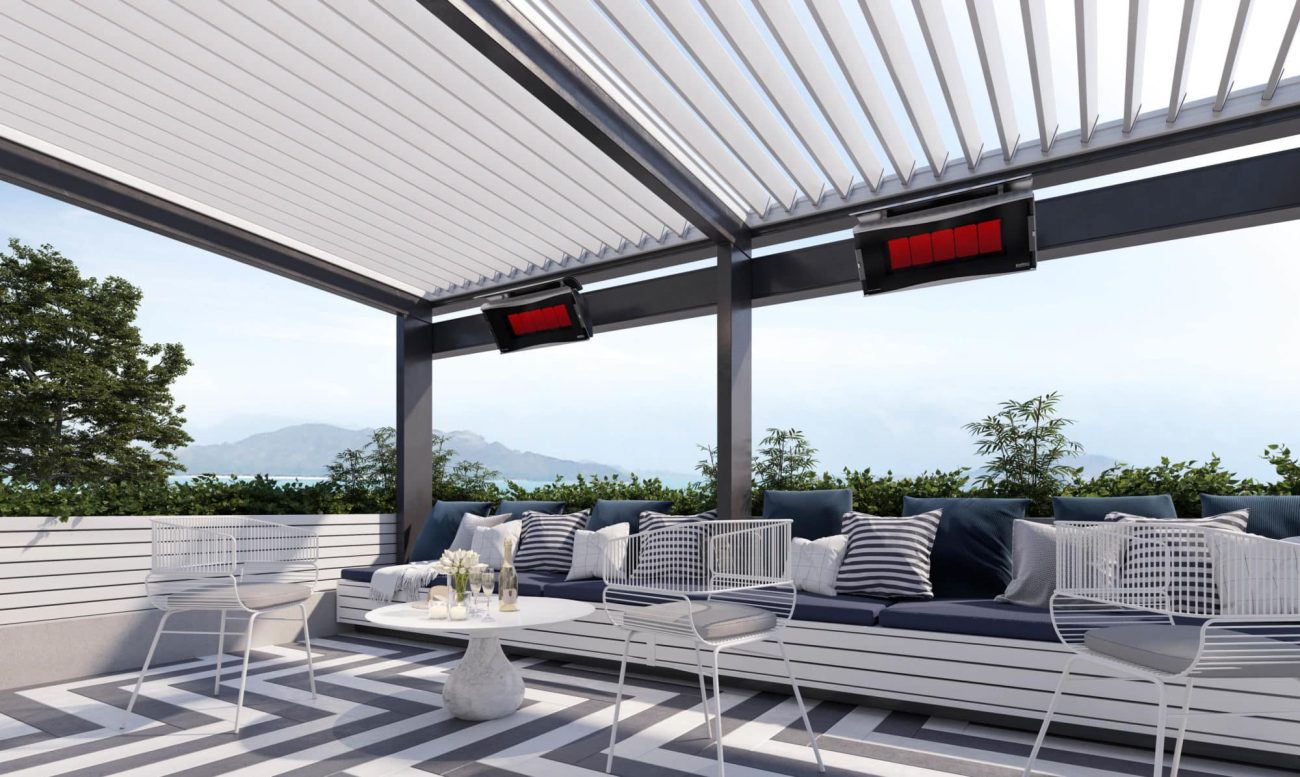
A commercial retractable awning extends when you want shade and folds away when you don’t — useful if you want the awning open for patio season but tucked in for winter storms. Retractable units can also be motorized and operated by remote or wind sensor. You can see the systems we install on our commercial retractable awnings page.
Property managers weighing awnings alongside other entrance upgrades — like seasonal vestibules — may find our commercial vestibule cost guide useful for comparison.
Branding: your awning is a billboard you own
The valance — the fabric strip hanging from the front edge — is prime real estate. Your business name, logo, or a short tagline can be printed right on it. A few things worth knowing:
- Colours matter more than you think. Matching your awning to your brand palette ties the whole facade together. If your brand colours are bold, consider a neutral body with brand-coloured accents so the awning doesn’t shout.
- Contrast wins readability. Dark lettering on a light valance (or the reverse) reads cleanly from the far sidewalk. Subtle tone-on-tone looks elegant up close and invisible from the street.
- Illumination is optional but powerful. Lighting under or in front of the awning keeps your branding working through winter’s 5pm darkness — and winter darkness arrives early in Toronto.
Materials that survive GTA weather
An awning over a storefront takes more punishment than a backyard one: busier sidewalks, more sun exposure, wind funnelling between buildings, and snow sitting on top through a cold snap.
Fabric: solution-dyed acrylic is the standard for quality commercial awnings — the colour runs through the fibre, so it resists fading and stays looking new for years. Vinyl-coated fabrics are another durable option, and they’re often the choice for backlit awnings. Frames: powder-coated aluminum is the default; it’s light, strong, and won’t rust out from under winter salt spray. Cheaper steel frames can be a false economy in an Ontario climate.
Permits and landlords: the reality check
This is the part that surprises first-time buyers, so it’s worth planning for:
- Landlord approval usually comes first. If you lease your space, your agreement almost certainly requires written consent for exterior changes. Get that conversation started early — some property managers have signage or colour guidelines.
- Municipal rules vary. In Toronto and most GTA municipalities, a projecting structure over public sidewalk can require a permit or sign variance, and rules differ for heritage districts and main-street overlay zones. Your awning contractor should be able to tell you what’s typical in your municipality, but the city’s building or signage bylaw is the final word — verify before fabrication, not after.
- Insurance: commercial installations should be done by insured installers, and your landlord may ask for a copy of their coverage.
None of this is a dealbreaker — it’s just paperwork that moves at its own pace. Budget a couple of weeks for approvals alongside your fabrication time.
Timeline: how long it actually takes
For a typical GTA storefront project: a site survey and quote first, then approvals, then fabrication (usually a few weeks for custom work), then installation — often done in a single day with minimal disruption to your business. From first quote to install, a custom commercial awning commonly takes several weeks end to end. Late fall and winter are the smart times to start: fabricators are less busy, and you can have the awning on the wall the week spring traffic picks up.
What does a storefront awning cost?
Honest answer: it depends on size, style, fabric, and how much custom branding you want. A modest fixed canopy for a single entrance starts lower; a large motorized retractable system with printed valance costs more. The only number that matters is yours — which is why commercial projects are quoted after a site survey, not priced off a rate card. If you’re budgeting, ask for a quote that separates the awning, the branding work, and installation so you can see exactly what drives the total.
Quick FAQ
How long does a commercial awning last? A quality acrylic awning on an aluminum frame typically lasts well over a decade in the GTA, with frame hardware outlasting the fabric.
Can I put my logo on it? Yes — valance printing and full-surface graphics are standard options. Keep the design simple and high-contrast for the best street readability.
Do I need a permit for a storefront awning in Toronto? Often, yes — projecting structures and anything functioning as signage can require permits or approvals, especially in heritage areas. Check the city’s requirements for your address before ordering, and loop in your landlord early.
Ready to put your name over the door?
We design, fabricate, and install commercial awnings across Toronto and the GTA — from single-storefront canopies to multi-unit projects for property managers. If you’re exploring commercial shade for a building or portfolio, our commercial awnings guide for property managers covers the broader picture. When you’re ready, get in touch for a site survey and quote.