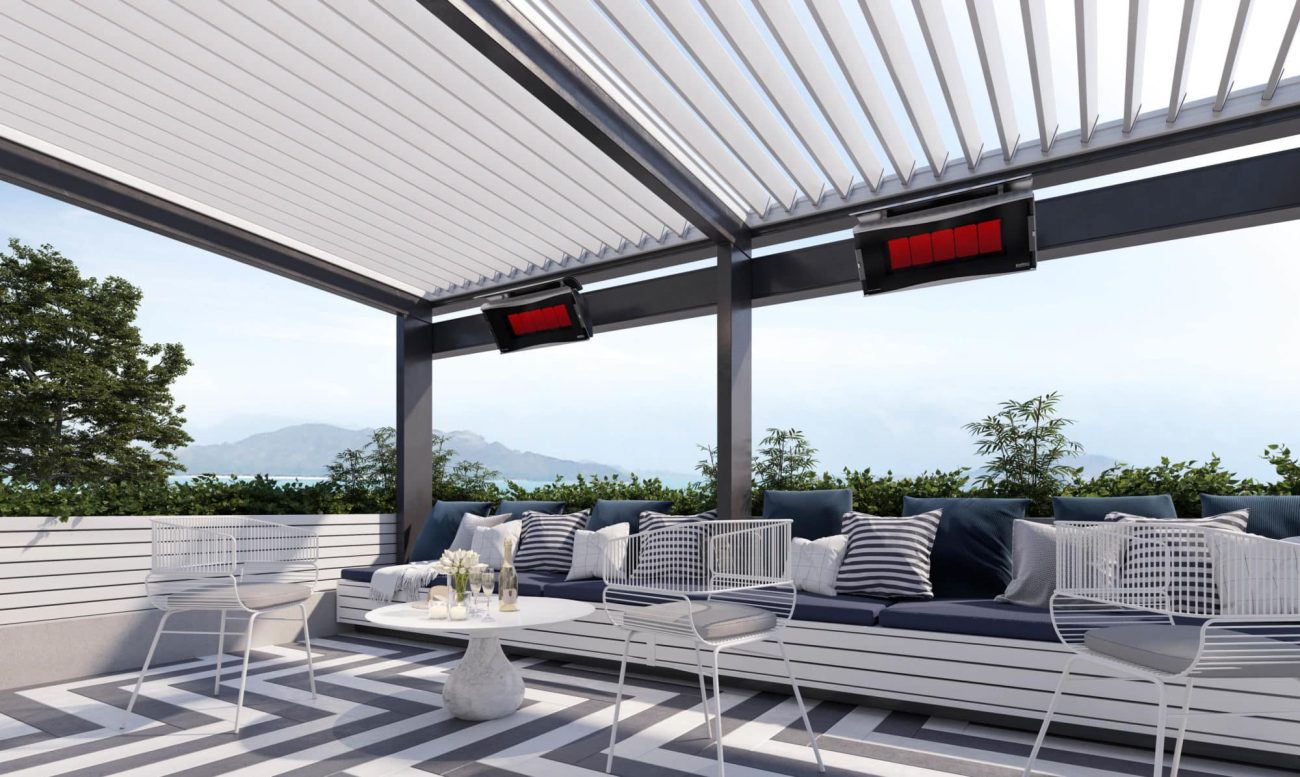
Short answer: gas heaters win on raw heat for open patios; electric infrared heaters win on convenience, placement flexibility and total cost of ownership. For most Toronto homes and many restaurants, a premium electric unit (or a mix of both) is the more practical long-term choice – but the right answer depends on where your patio sits and what lives behind its walls.

We install both at Canadian Shade – the full Bromic Smart-Heat line, in gas, electric and portable versions – so here is the honest, installer’s-eye comparison.
How each one makes heat
Gas units burn propane or natural gas and radiate heat outward in a wide, intense pattern. Electric infrared units use quartz or carbon elements to radiate targeted warmth at people and surfaces, not the air. That difference – heating air versus heating you – matters more in Canada than anywhere else, because moving winter air steals convected heat before you ever feel it.
Heat quality and wind performance
In a still evening, a good gas heater feels like standing near a campfire: broad, immediate, powerful. Add wind and that advantage shrinks, because the warm air it mixes keeps getting carried away. Infrared’s targeted radiation holds up better in exposed patios and rooftop settings – one reason you see so many ceiling-mounted electric heaters on Toronto restaurant patios today.
What installation involves
Gas: you need a natural gas line run and certified hook-up, or space for a propane tank exchange. Expect a licensed gas technician, clearances from combustibles, and a location decision that is close to permanent.
Electric: a dedicated circuit at the right amperage, run to a weatherproof connection. No combustion, no fuel storage, no annual fuel-line checks. If your panel has capacity, an electric heater can be working the same day the wiring is done.
Running costs, Toronto edition
Neither is free to run on a February night, and honesty is the best policy here. In Ontario, electricity is pricier per unit of energy than natural gas, but electric infrared heats only what you point it at. A typical gas patio heater warms a wide cone – including air nobody is sitting in. In shoulder-season use (October, March, cool summer evenings), most households we serve find the comfort-per-dollar gap closes considerably, and the convenience gap opens wide in electric’s favour. For heavy winter use on a fully enclosed or wind-sheltered patio, gas’s raw output still earns its keep.
Safety and rules worth knowing
Gas heaters on residential balconies and many condo patios are restricted or banned – open combustion near a building face is a hard no with most condo boards and fire departments. Electric units, mounted and fixed, are the standard answer for balconies and smaller patios. Restaurants have more latitude with gas but must respect clearances and ventilation requirements. When in doubt, check before buying – or ask us; we see these cases weekly.
Our honest recommendation matrix
- Small residential patio or balcony: electric, mounted or portable. No fuel, no rules headaches.
- Large open backyard patio: gas for reach, possibly paired with wind screens.
- Restaurant patio: a mix – gas or high-output electric over the main seating, electric in tight zones and covered areas.
- Covered or semi-enclosed spaces: electric, almost always.
One more thing: quality shows
The $150 mushroom heater from a big-box store and a premium Bromic unit both make heat, but they are not the same product. Premium units radiate more evenly, resist wind and corrosion, and are built to stay on a Toronto patio for many winters. If the patio matters to you, buy the heater that matches it.
Quick answers to common questions
Can I mix gas and electric on the same patio? Yes, and many restaurants do exactly that – gas or high-output electric over the main seating, smaller electric units near walls, walkways and covered zones. There is no conflict; each unit just needs its own safe mounting and clearance.
Do infrared heaters actually work in a Canadian winter? That is what they are built for. Infrared warms people and surfaces directly instead of the air, so it holds up far better than convection heat on a cold, breezy evening. Wind is still the enemy – which is why pairing heaters with wind screens or zip shades is one of the smartest upgrades we install.
How long does installation take? Most residential heater installs are a single visit once the mounting surface is ready. Hardwired electric units and natural-gas connections should be routed through proper wiring and gas lines – we handle that as part of the install.
Are these safe left unattended? No patio heater should be left running unattended. Mounted Bromic units shut off at the wall or by remote, and we position every unit with clearances to combustibles in mind, so the “off” switch is always the safest one.
Still deciding?
Tell us about your patio – size, exposure, what’s above it – and we will spec the right heater and give you an installed price. Get a free quote and be warm by the weekend.