Short answer: commercial umbrellas win on flexibility and lower upfront cost – you can move shade wherever the sun, or the guests, happen to be. Fixed commercial awnings win on durability, wind performance and around-the-clock branding. For most Toronto restaurants and cafes, the choice comes down to your layout and how long you plan to be in the space: if your seating and sun exposure shift through the day, commercial umbrellas give you options; if you own your footprint and want a four-season asset, a fixed awning is the stronger long-term investment. Here is an honest comparison from a team that installs both across the GTA.

What commercial umbrellas do best
Today’s commercial umbrellas are a long way from the wobbly patio umbrellas you remember. Modern commercial parasols are engineered for daily service: heavier frames, fade-resistant canopies, and replacement parts that actually exist. Side-post models like the May Rialto hold the canopy off to one side, so the pole never claims a table or blocks a server’s path. Large-format parasols shade an entire terrace section from a single base instead of a forest of poles.
The real advantage is flexibility. Rotate an umbrella through the day as the sun crosses your patio, close it for a windy afternoon and reopen for dinner service, or move shade over to the west tables for golden-hour drinks. Cafes and restaurants that host private events love this: reconfigure the whole patio for a Saturday booking and put it back the next morning without touching a tool. Umbrellas also go in without the construction work a fixed structure can involve, which matters when you are in a leased space or planning a spring opening on a deadline.
Where fixed awnings pull ahead
Wind and shoulder-season weather are where fixed awnings earn their keep. An umbrella is a smart, disciplined tool – close and secure it when the wind picks up, the way every commercial parasol manufacturer specifies. A properly anchored fixed awning stays at work through those gusty, chilly shoulder-season days when your patio is exactly the amenity that fills tables. It also gives you honest rain coverage during service, not just sun management.
There is also a coverage argument. Commercial umbrellas shade roughly the area under the canopy; a fixed awning over a window wall or terrace edge keeps the sun off the glass all day long, which translates to cooler interiors and lower afternoon strain on your HVAC. In older storefronts across Toronto’s commercial strips, that afternoon west sun is a real comfort problem for anyone seated by the window.
Branding that works around the clock
A fixed awning is signage as much as shade. Your name and colours on the valance face the street whether you are open, closed, or buried in a February snowbank, and a lit awning reads as a landmark after dark. A brand-printed umbrella does great work while it is up – but umbrellas come down or get closed, and in storage they market nothing.
One practical note: municipal sign and canopy rules vary across GTA municipalities, Toronto included, and heritage streetscapes often have extra layers. Worth confirming what is permitted before you fall in love with a big printed valance – or ask us, because we deal with these questions on nearly every commercial project.
Cost over the long run
Commercial umbrellas typically cost less up front, and you can phase them in – start with two, prove the patio math, add more next spring. Fixed awnings are a bigger initial project with a longer payback horizon, but a well-built aluminium-framed awning serves for years, and the fabric can be recovered rather than replaced when the colours fade. Measured per season, many operators find the fixed structure is cheaper than replacing lower-grade umbrellas every couple of years.
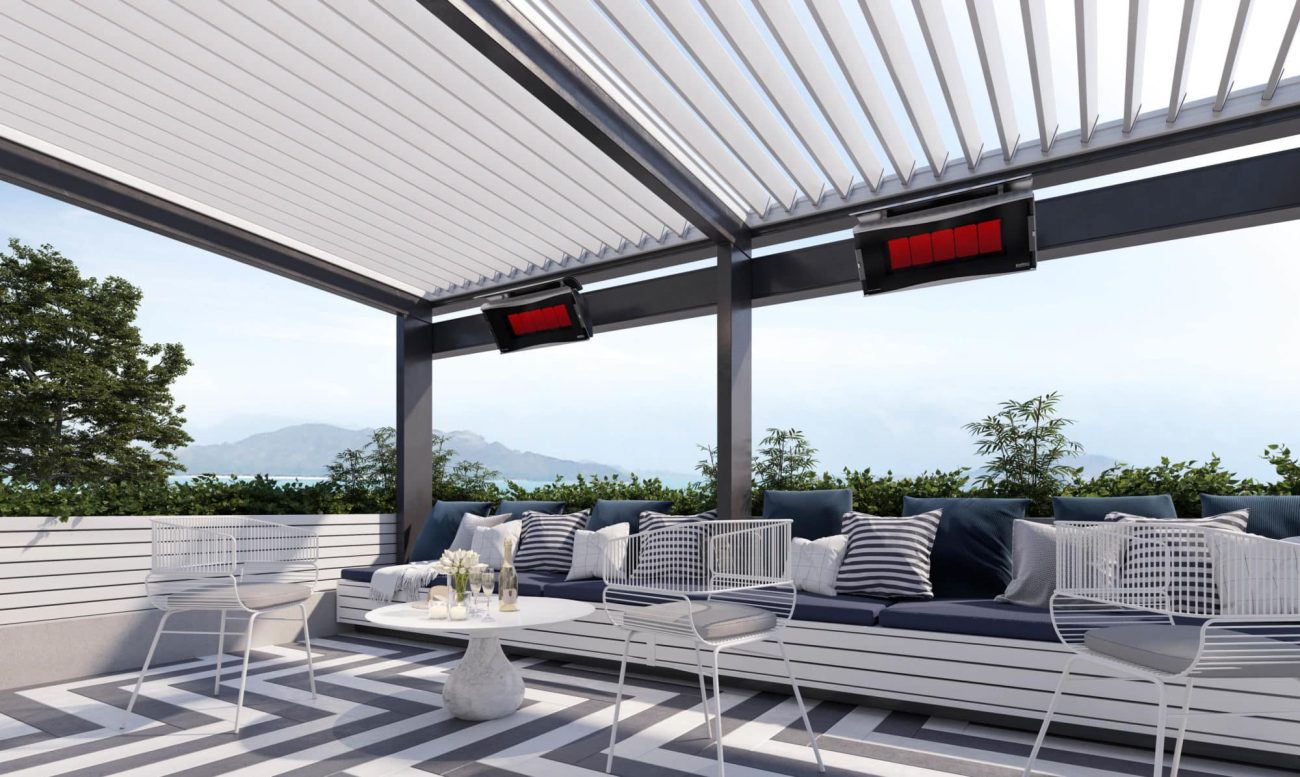
If the trade-offs both sound good, a commercial retractable awning splits the difference: fixed-structure durability and wind strength for daily service, with the ability to pull the awning in during storms or the off-season.
The layered setup most GTA patios end up with
The busiest patios we work on rarely pick one shade tool. A common layout: a fixed awning or canopy over the entrance and terrace edge for weather protection and street-facing brand, commercial umbrellas across the open floor for flexible mid-patio shade, wind screens along the most exposed side, and restaurant patio heaters to stretch the season into the cool evenings. That layered setup is what keeps a patio full on a 12-degree October evening while the place next door is dark.
Which should your restaurant choose?
Lean toward commercial umbrellas if you lease your space, reconfigure your layout often, host private events, or want to phase in your spend. Lean toward a fixed awning if you own the building, want permanent street-facing branding, sit exposed to wind and rain, or are building the patio as a year-round asset. And if you genuinely cannot decide, that is usually a sign you want the retractable-awning middle path – it is the option we most often end up recommending to operators who plan to stay put.
Talk to Canadian Shade
We design, build and install both – May parasols and fixed commercial awnings – for restaurants, cafes, breweries and retail patios across Toronto, Mississauga and the wider GTA. Site visit, honest recommendation, and a quote that reflects how you actually run your patio. Get a free consultation and we will help you shade the season properly.